Violent index swings this week are being dictated by a clear transmission mechanism: physical oil constraints pushing the 10-year Treasury yield to 19-year highs and abruptly compressing equity risk premiums. The broad market slide is merely a symptom of a deeper, multi-quarter structural reset.
When Physical Barrels Dictate Bond Yields
Geopolitical energy disruptions are often modeled as short-term shocks, but they have emerged as a primary driver of the cost of capital . When Saudi Arabia shuttered its East-West Pipeline bypassing the Strait of Hormuz following drone strikes, Brent crude spiked past $105 per barrel. Domestically, U.S. diesel prices pushed past a record $6 per gallon. This physical supply bottleneck helped drive the benchmark 10-year Treasury yield past the critical 5% threshold.
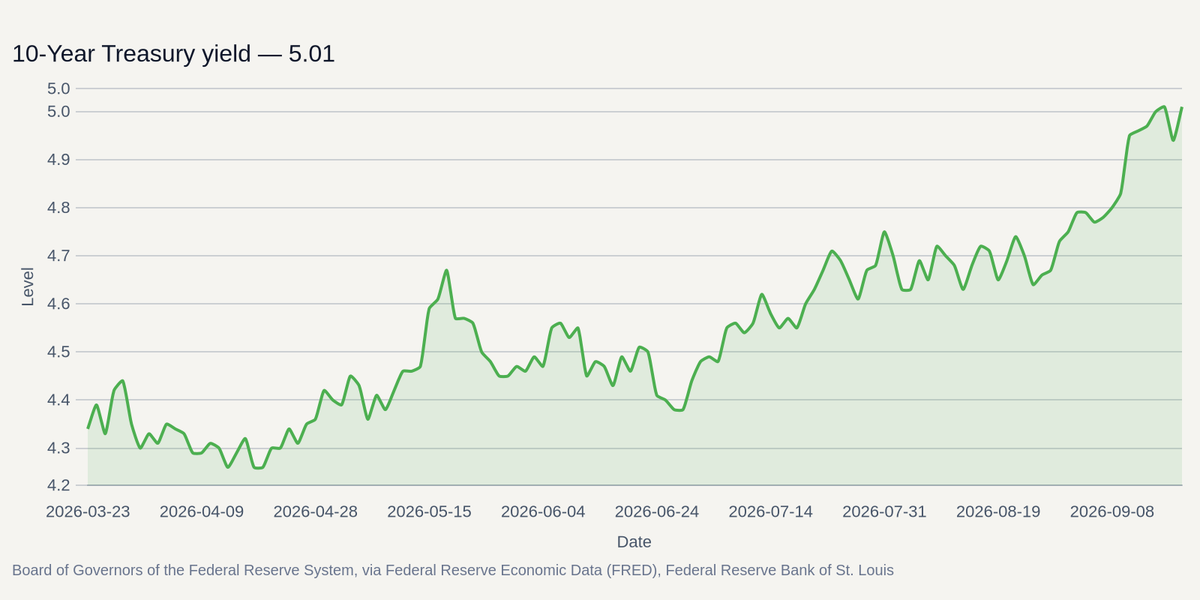
The transmission from the physical barrel to the bond market is direct. Equity valuations are being pressured not by deteriorating earnings, but by a mathematically rigid cost-of-capital reset . As long as global supply chains remain fractured, the bond market has a firm physical floor beneath it.
The Terminal Rate Trap
Central banks are effectively trapped by an exogenous supply constraint. With the ongoing U.S.-Iran war driving persistent inflation, Federal Reserve Chairman Kevin Warsh hiked the overnight funds rate to a range of 3.75% to 4%. He explicitly noted that summer inflation readings failed to show meaningful improvement, cementing the higher-for-longer regime.
When central banks hike rates to combat commodity-driven inflation, they intentionally increase borrowing costs to destroy demand . That creates a massive headwind for highly levered tech and consumer names, shifting the macro environment firmly into the Energy Shocks and Rate Hikes playbook. The only structural risk to this hawkish thesis is a sudden diplomatic breakthrough in the Middle East that flushes the geopolitical premium out of crude, instantly unwinding the pressure on terminal rates.
Pricing the Upstream Capture
In this environment, upstream operators capture windfall margins while broader market risk premiums compress. Heavyweights like ConocoPhillips and EOG Resources are positioned to directly monetize an oil regime flirting with triple digits.
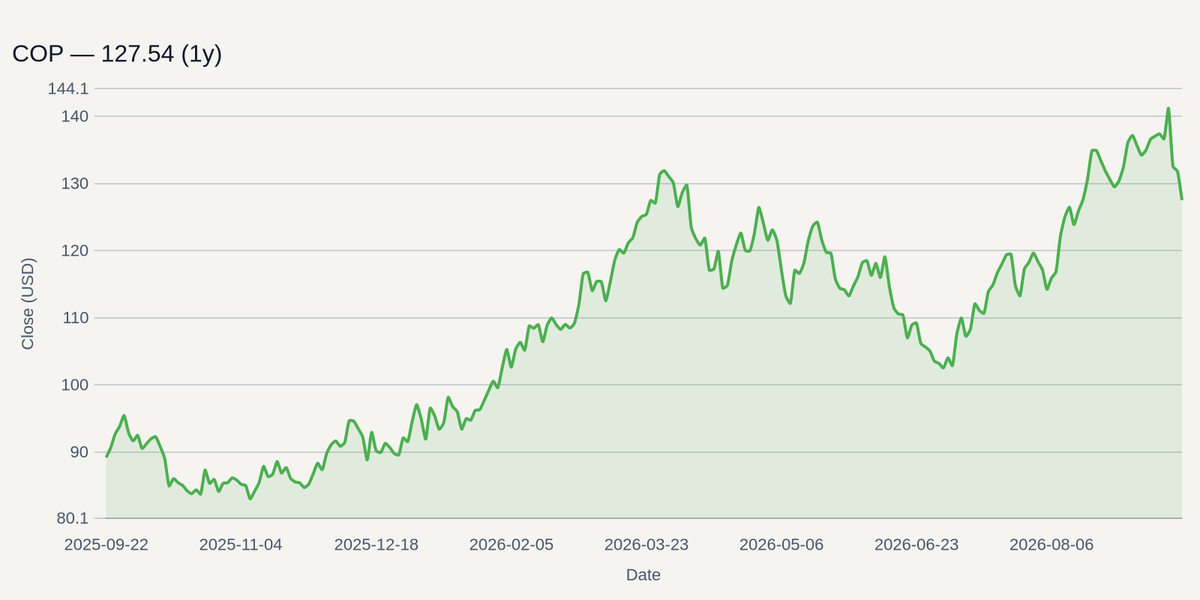
These independent producers enjoy robust upward momentum, benefiting from the mechanical reality that every dollar added to the geopolitical risk premium drops straight to their free cash flow. For names with global exposure like ExxonMobil and refiners like Valero Energy, the rate-hike headwinds are easily offset by localized refining crack spreads and pure volume pricing.
The Services Bottleneck and Onshore Rotation
Not every energy name gets a free pass. Services providers face a more complex setup as capital gets reallocated across regions. Halliburton is approaching its Q3 earnings carrying known Middle East activity declines.
That regional disruption has reset expectations, with adverse paths potentially dragging the stock down toward $29.00. However, the transmission mechanism is already rotating. President Trump's pro-drilling regulatory landscape is expected to stabilize North American onshore capital budgets heading into 2027. If domestic E&P operators accelerate their capex to offset international shortfalls, the onshore services bottleneck could rapidly unwind, creating a defined catalyst for recovery across the services supply chain.