This week’s headlines show two forces colliding: Washington is making it harder to waive foreign-sourcing rules for weapons production (no more 'we tried nothing and we're out of options' waivers for Chinese minerals), while executives at the Farnborough Airshow are openly pleading for private capital to bridge public funding gaps. The defense sector is no longer just waiting on budget approvals—it is battling real-world chokepoints in parts, permits, and private financing. What was recently priced as a stable defensive play is being aggressively re-rated into a long-cycle industrial build-out .
The execution bottleneck
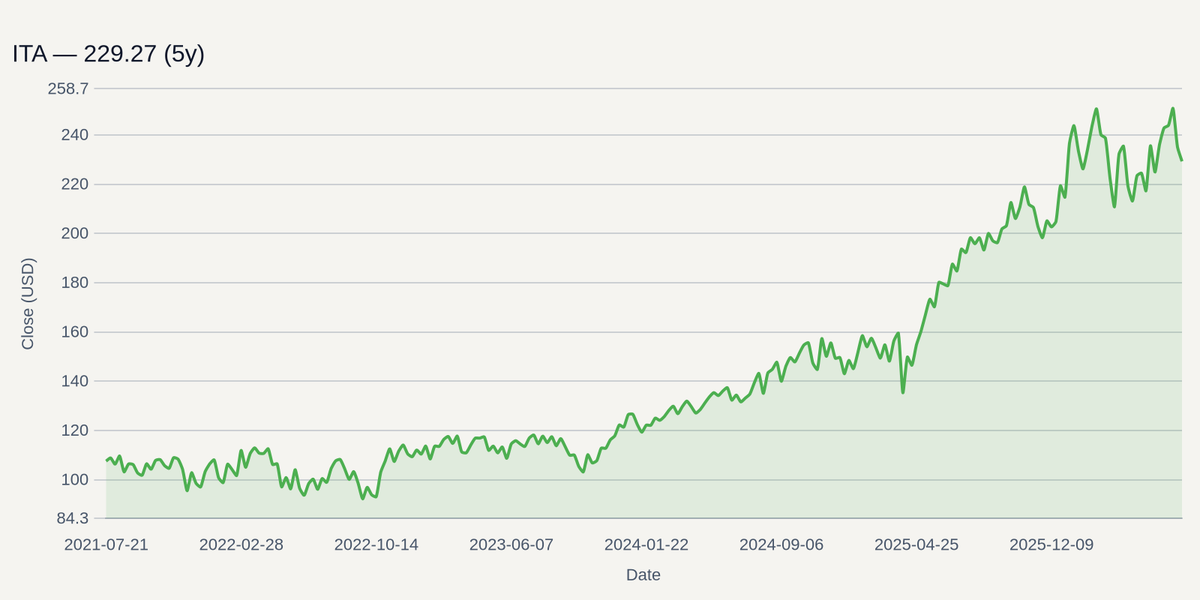
The Security Supercycle is structurally intact, driven by deteriorating global peace and a $2.63 trillion global military expenditure baseline . But pure demand is no longer the metric that matters. The real differentiator is execution scale—hardening supply chains against evolving tariffs and export controls, particularly for dual-use programs .
When the administration cracks down on critical mineral waivers (as it did with Monday's executive order targeting Chinese supply chains—essentially telling contractors that "we tried nothing and we're out of options" is no longer a valid excuse), it immediately pressures margins on fixed-price development contracts. Prime contractors cannot just engineer superior tech; they have to physically secure the raw materials without relying on prohibited overseas suppliers. This friction is exactly why defense executives are courting private equity and institutional capital—they need to fund capacity expansion long before the government checks actually clear.

Pricing the backlog into earnings
As Lockheed Martin and RTX Corporation step up to the earnings mic on Thursday (followed by General Dynamics next week), the focus shifts entirely to backlog conversion. Record multi-year commitments from initiatives like the recent NATO Summit in Ankara (where allies pledged €70 billion in military aid for Ukraine, proving once again that geopolitical tension is the ultimate recurring revenue model) are generating massive valuation premiums .
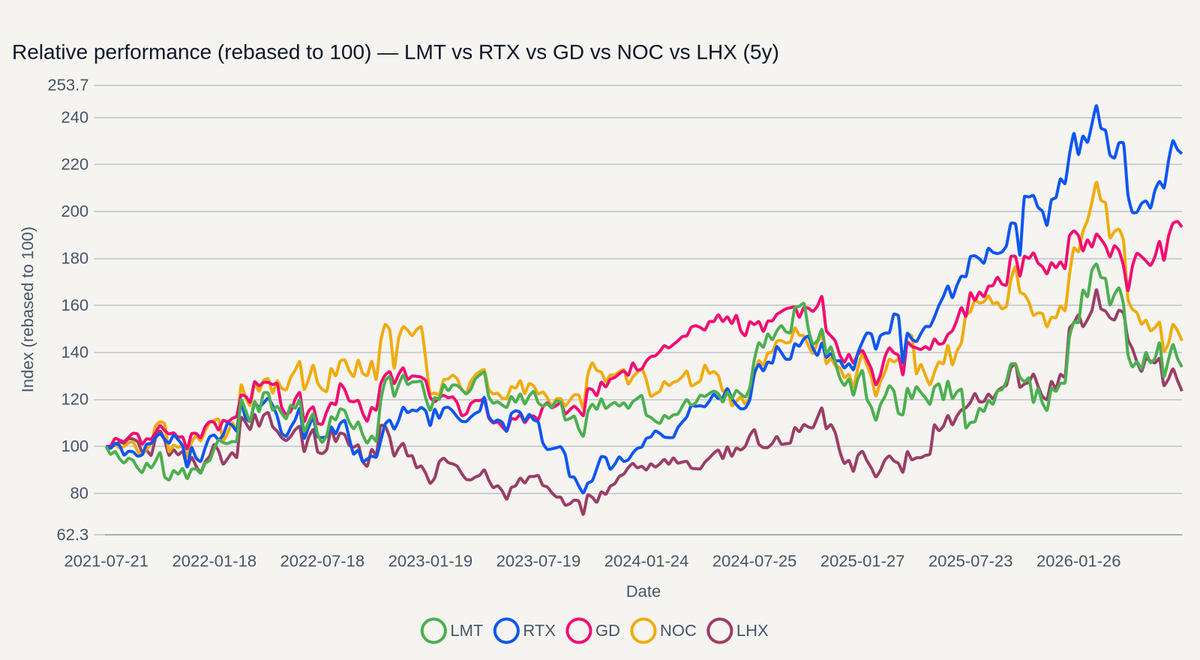
The catch? A massive backlog only prints cash if you have the workforce and supplier networks to actually build the inventory . These prime contractors are trading at premiums because they offer execution certainty in an environment where smaller suppliers are choking on compliance and working capital constraints (turns out, building hypersonic missiles requires a slightly more robust supply chain than a drop-shipping business). With Northrop Grumman reporting tomorrow and L3Harris Technologies on deck for next week, the narrative hinges entirely on how quickly they can ramp up production for next-generation aviation and space systems without bleeding cash on logistics.
Where the balance sheet risk lives
The primary risk to this industrial supercycle isn't a sudden outbreak of global peace—it's the capital bridging. Private investors are being asked to step in because cash-strapped European governments and tangled U.S. procurement cycles aren't moving fast enough to fund the physical tooling and factory footprints required. If private capital balks at the hurdle rates (or the regulatory headaches of owning dual-use technology), the production ramp stalls.
Ultimately, the defense trade has fundamentally rotated. It is shedding its reputation as a safe-haven dividend yield and behaving like a heavy industrial capacity race . Investors aren't just underwriting government budgets anymore; they are underwriting supply chain logistics.