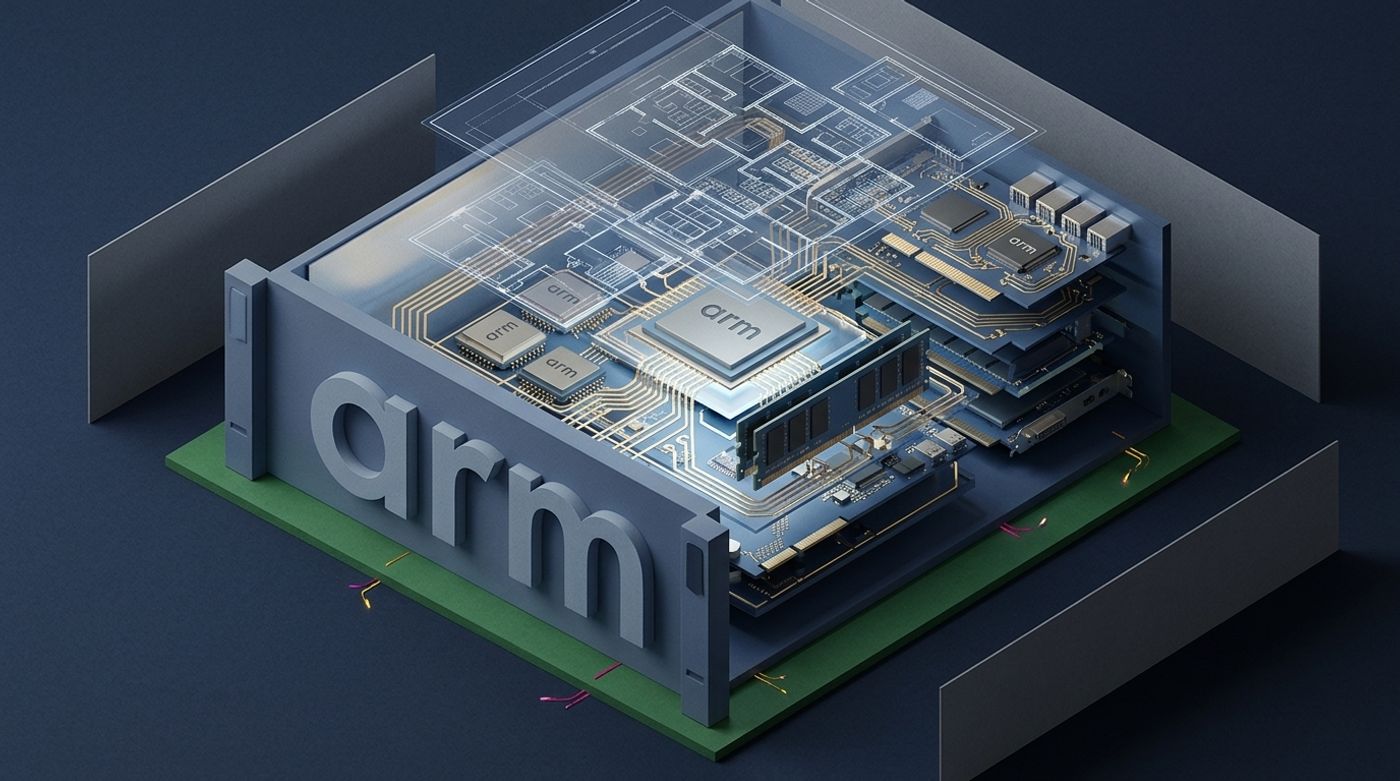
The first phase of the AI build-out was a brute-force scramble for raw GPUs. The next phase is a hyper-focused race for power efficiency and custom silicon. We are moving from buying off-the-shelf accelerators to renting the fundamental architectural blueprints.
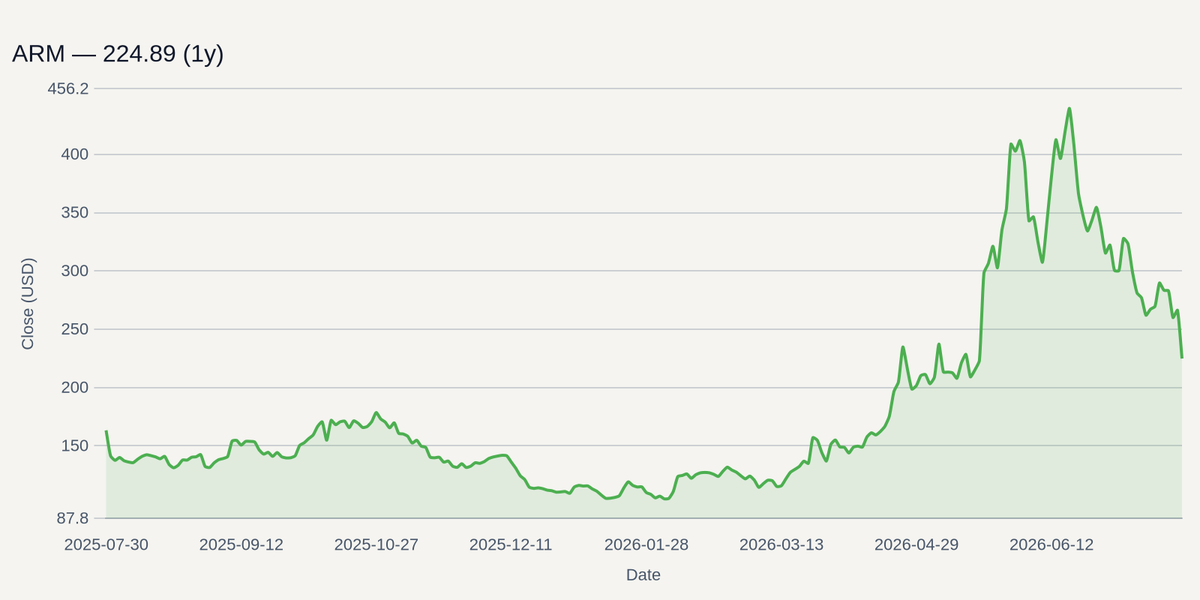
Overnight, ARM projected second-quarter revenue well ahead of Wall Street estimates, riding a wave of energy-efficient design adoption inside AI data centers . The company formally filed its first-quarter fiscal 2027 results, validating a structural transition in how compute infrastructure is monetized beyond raw hardware manufacturing .
The Blueprint Tax on Compute
Arm does not manufacture physical chips. It licenses the instruction sets that allow silicon to communicate with software. As hyperscalers—desperate to cap their runaway power budgets and reduce reliance on single-supplier GPU monopolies—spin up their own custom silicon, they inevitably pay the Arm toll.
Whether it is a custom cloud processor or a dedicated edge-inference chip, the device relies on a foundational architecture to function. This dynamic effectively turns Arm into a utility for Generative AI hardware. By sitting at the IP layer, the company extracts a toll on the aggregate volume of compute deployed globally, avoiding the capital-intensive misery of operating physical fabrication plants.
The v9 Economics
The financial transmission mechanism driving this beat is the Armv9 architecture. This is not just a generational speed bump; it commands a significantly higher royalty rate per chip than its predecessor.
Historically, as v9 penetration accelerates, data center royalty revenue has doubled year-over-year. The math here is ruthless but simple for the IP holder: more complexity at the edge and deeper inside the server rack equals a wider margin capture per unit. However, at a staggering 267x trailing price-to-earnings multiple, flawless execution isn't a bonus—it is aggressively priced in. Any stall in adoption leaves zero valuation cushion.
Geopolitical Sand in the Gears
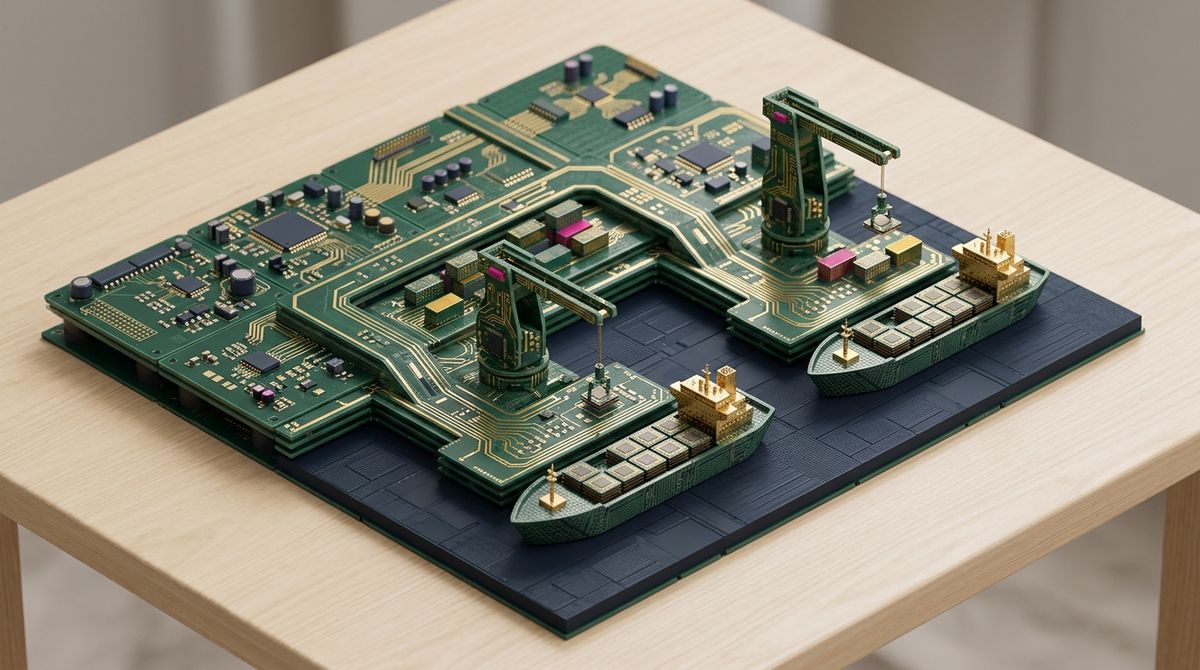
The risk to this pristine, software-like margin profile isn't just open-source competition like RISC-V. It is the physical reality of global trade policy.
Scouter modeling isolates a major volatility catalyst arriving around December 10, when the U.S. Commerce Department is expected to review export restrictions on advanced semiconductor technologies. Arm China joint venture revenues remain uniquely exposed to Washington's regulatory mood. If exemptions evaporate or controls tighten on edge-compute architecture, the stock faces a modeled downside risk toward the $200 level. Geopolitics is the primary tail risk to an otherwise clean unit-economic story.
Sizing the Next Edge Setup
For investors looking past this week's earnings relief, the true test of Data Center Infrastructure dominance arrives at the Arm Tech Symposia in late October.
That catalyst will map exact v9 adoption rates across mobile, automotive, and server markets. The thesis is no longer just betting on aggregate silicon volume or raw factory output; it is measuring who extracts the highest structural rent from the ecosystem's redesign.