
While broad indices flinch at surging Treasury yields and Middle East tensions, the memory and semiconductor equipment complex is quietly detaching from the macroeconomic cycle. The historical boom-and-bust rhythm of the memory market has been replaced by brutal supply discipline. Manufacturers are increasingly building only to suit long-term customer agreements, repurchasing stock rather than flooding the market with speculative capacity. This restraint at the end-market level is colliding with a massive, localized fab buildout, minting a multi-quarter earnings inflection for the physical toolmakers.
The sovereign inefficiency premium
Forget the architectural rent of custom silicon for a moment; the current cycle is fundamentally about physical manufacturing constraints. A projected $400 billion global investment wave is set to entirely reshape 300mm fab production by 2027 . This is not just organic infrastructure demand—it is a heavily subsidized geopolitical arms race.
Sovereign investments in domestic chip manufacturing are artificially adding 5% to 8% of extra global capacity strictly for technology sovereignty . Here is the catch with reshored capacity: it is structurally less efficient than the historical, deeply integrated global supply chain. When every major region demands its own redundant foundry ecosystem, the total volume of extreme ultraviolet (EUV) lithography machines and metrology tools required to hit the same global yield skyrockets.
Monetizing the redundancy
This structural inefficiency is directly fueling the AI Fab Equipment Supercycle, transforming names like ASML and KLAC from cyclical beneficiaries into sovereign infrastructure proxies. Front-end fab equipment investment is already accelerating, with industry forecasts projecting 18% growth this year alone .
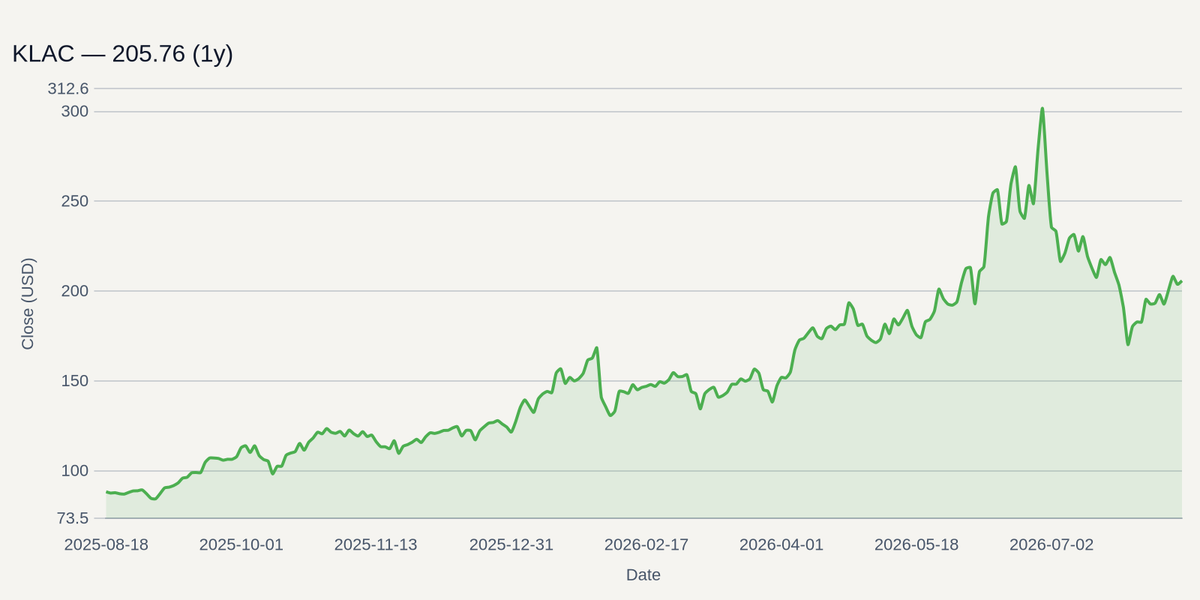
Rather than fighting for share in a saturated market, these dominant suppliers are essentially rationing capacity to a desperate customer base. Following AMAT's recent fiscal third-quarter print, the visibility into this backlog conversion has become the primary metric the Street is pricing. The domestic United States market is experiencing steady baseline growth, fueled directly by this blend of government support and the rapid adoption of data center infrastructure .
Forcing the capex hand
The catalyst path for the equipment providers is unusually rigid, driven more by tax code deadlines than pure enterprise IT budgets. Major foundries face a hard December 31, 2026 construction-start deadline to qualify for enhanced advanced manufacturing tax credits under the CHIPS Act . That ticking clock is expected to force rapid, irreversible capital commitments over the next four months, effectively locking in revenue for the equipment oligopoly regardless of short-term macroeconomic chop.

The export control overhang
The primary threat to this thesis is the geopolitical tightrope these equipment makers are walking with China. We model an adverse base case for names with high exposure to trailing-edge Chinese demand—specifically LRCX—as the U.S. Commerce Department evaluates tighter export restrictions this fall.
If aggressive Chinese capacity build-outs in mature nodes eventually lead to oversupply, it could compress utilization rates and hammer legacy equipment margins. However, if the oligopoly maintains its disciplined capacity rationing, the sovereign fab buildout ensures a durably elevated floor for the leading-edge physical supply chain.