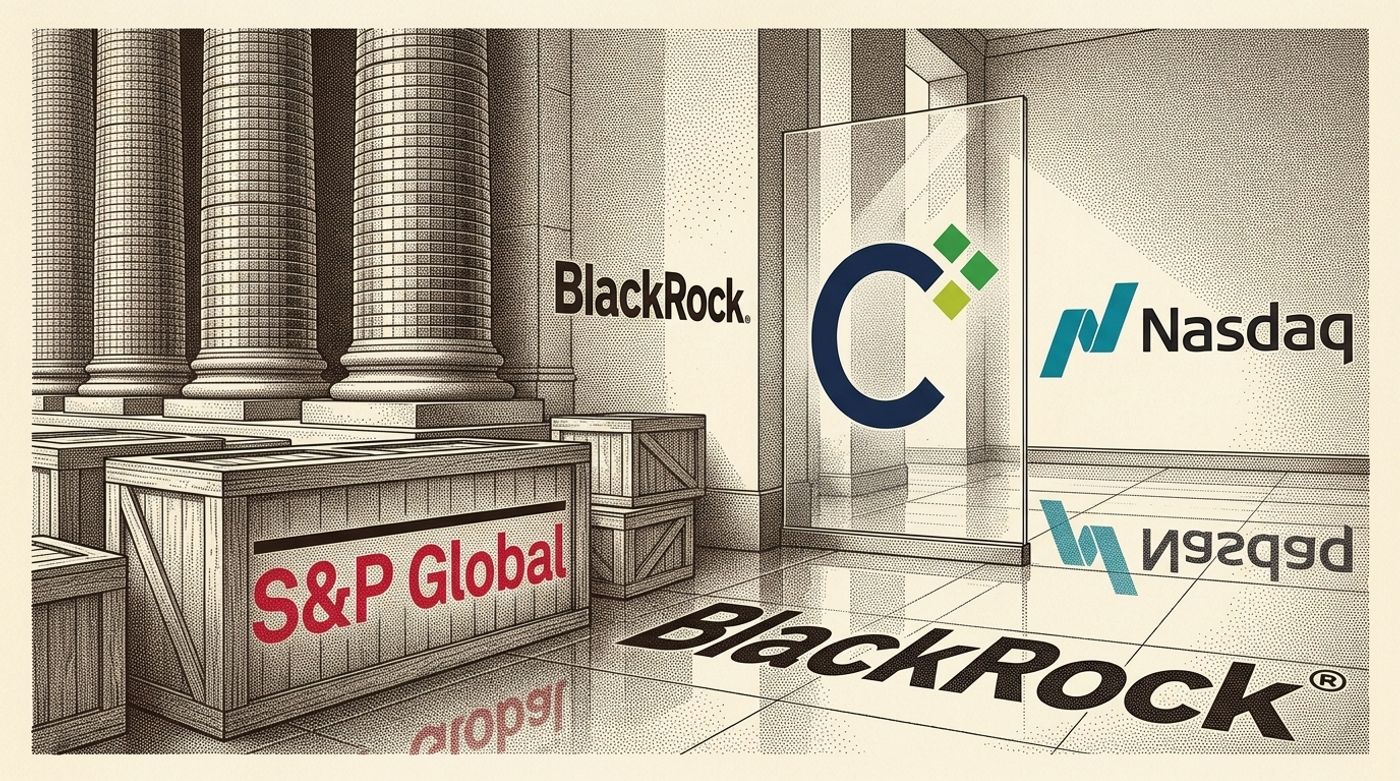
The headline equity benchmark is up 14% this year, yet beneath the surface, more than four in ten S&P 500 constituents are actively underwater. The broader U.S. economy is not necessarily booming; rather, the cap-weighted index is being heavily subsidized by a single supply chain. Extreme capitalization weighting in Silicon Valley technology leaders has transformed benchmark index mechanics into a self-reinforcing passive flow flywheel.
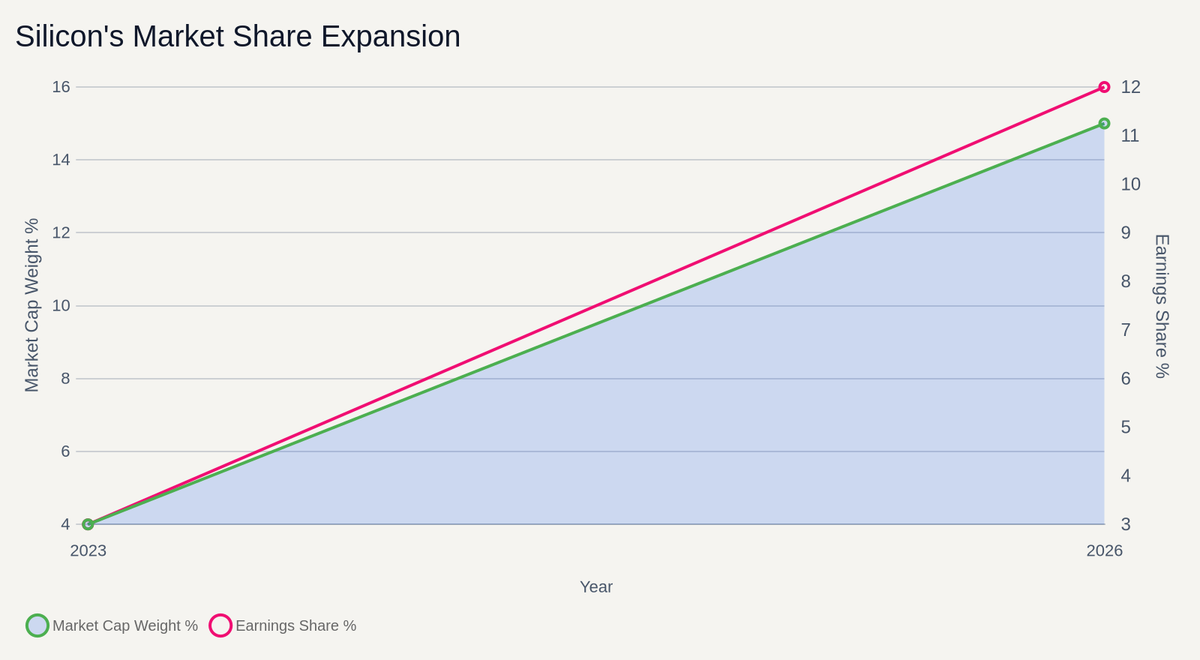
This is no longer a temporary cyclical distortion. Semiconductor stocks now command roughly 15% of the total U.S. stock market capitalization, a massive leap from around 4% in 2023. Their share of aggregate market earnings has followed suit, vaulting to nearly 12% from a 3% baseline over the same three-year window.
The Benchmark Toll Collectors
When market concentration becomes structural, the quietest winners are the index gatekeepers and financial exchange operators. Asset managers are locked into tracking top-heavy benchmarks, generating compounding licensing fees for the architects who maintain the math. S&P Global and Nasdaq control the intellectual property of the most heavily tracked indices in the world, effectively tolling the automated flows of passive retirement capital.
Asset owners are increasingly deploying custom thematic and capped benchmarks to manage their exposure to these dominant technology trends, expanding high-margin subscription revenues for index designers . Systematic integration of critical technology weightings into quantitative asset allocation models reinforces relentless passive inflows into these benchmarks . The structural buyer in this loop is BlackRock, whose iShares franchise mechanically channels capital into the mega-cap corporate elite regardless of traditional valuation metrics.
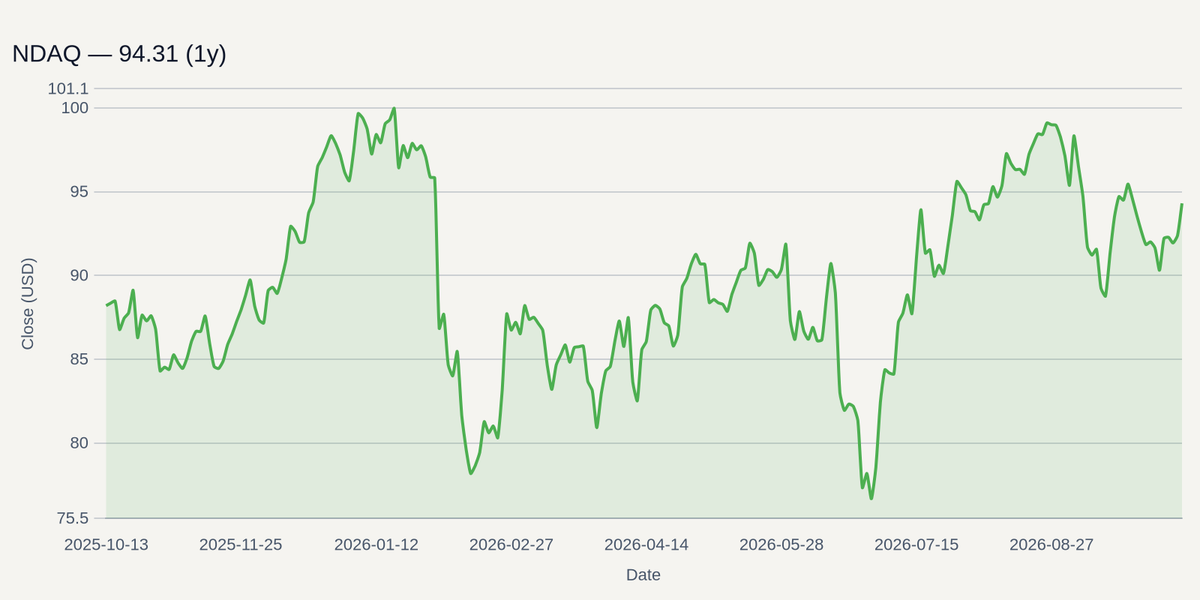
As Nasdaq approaches its October 22 earnings release, Wall Street is modeling a high hurdle rate for its recurring revenue metrics and the integration of its Adenza acquisition. Facing a premium multiple, the exchange operator needs to demonstrate that its capital access platforms can maintain top-line growth even as broader listing volumes normalize. S&P Global follows closely with its own print on October 27, where its indices division remains a critical margin driver.
Monetizing the Tail Risk
Because passive vehicles have become extraordinarily top-heavy, institutional managers are forced to aggressively hedge their concentration exposure. This demand for hedging fuels record trading volume across broad benchmark contracts and zero-days-to-expiry index derivatives . The exchanges that list and match these specialized instruments capture transaction fees on every contract executed to insulate a portfolio from a mega-cap drawdown.

Cboe Global Markets operates as the primary beneficiary of this volatility management, controlling exclusive exchange rights to SPX index options. To capture even more of this institutional hedging velocity, Cboe is scheduled to roll out an expanded suite of AM-settled weekly S&P 500 options on November 9 (subject to regulatory review). The more fragile and concentrated the underlying Index Mechanics & Silicon Market Concentration trend becomes, the more volume flows across Cboe's proprietary trading venues.
The Liquidity Trapdoor
The most acute risk to this exchange-led fee cycle is a rapid unwinding of the exact concentration that built it. Crowded institutional positioning in large-cap passive vehicles elevates downside tail risk, creating sharp unwind dynamics whenever macroeconomic catalysts trigger a rotation away from mega-cap tech . If rising yields or shifting rate expectations force an abrupt capital flight toward value sectors, the passive flows reverse, pressuring the very AUM bases that generate these licensing fees.
We will get a real-time stress test of this dynamic heading into the annual Nasdaq-100 reconstitution this December (with changes announced on December 11 ahead of the December 21 effective date). If the index's concentration rules enforce weight caps on the largest silicon heavyweights, it will trigger massive mechanical selling by passive sponsors. Until that pressure valve pops, the index gatekeepers will continue to print cash on the widening gap between the market's silicon giants and everyone else.