
Inspire Brands—the holding giant behind Dunkin’, Arby’s, and Sonic Drive-In—has confidentially filed for a U.S. initial public offering, seeking to capitalize on a thawing IPO window with a reported valuation target near $20 billion. Formed by private equity backer Roark Capital in 2018, the conglomerate now manages a portfolio of more than 33,000 global restaurants generating roughly $33.4 billion in annual sales.
The confidential filing lands at a fascinating, highly polarized moment for the K-Shaped Consumer Economy. The IPO window for consumer-goods companies has cracked open in early 2026, breaking the freeze caused by tariff-related uncertainty last year. However, testing the public markets now forces Wall Street to evaluate a deeply fractured spending environment where aggregate retail resilience masks severe pressure at the lower end of the income spectrum.
Geopolitical Squeeze on Discretionary Wallets
While high-income households continue to support stronger retail spending thanks to labor-market resilience and wealth effects, fast-food and mass-market chains are facing a different backdrop. Higher gasoline prices can act as a tax on lower-income consumers and squeeze discretionary budgets.
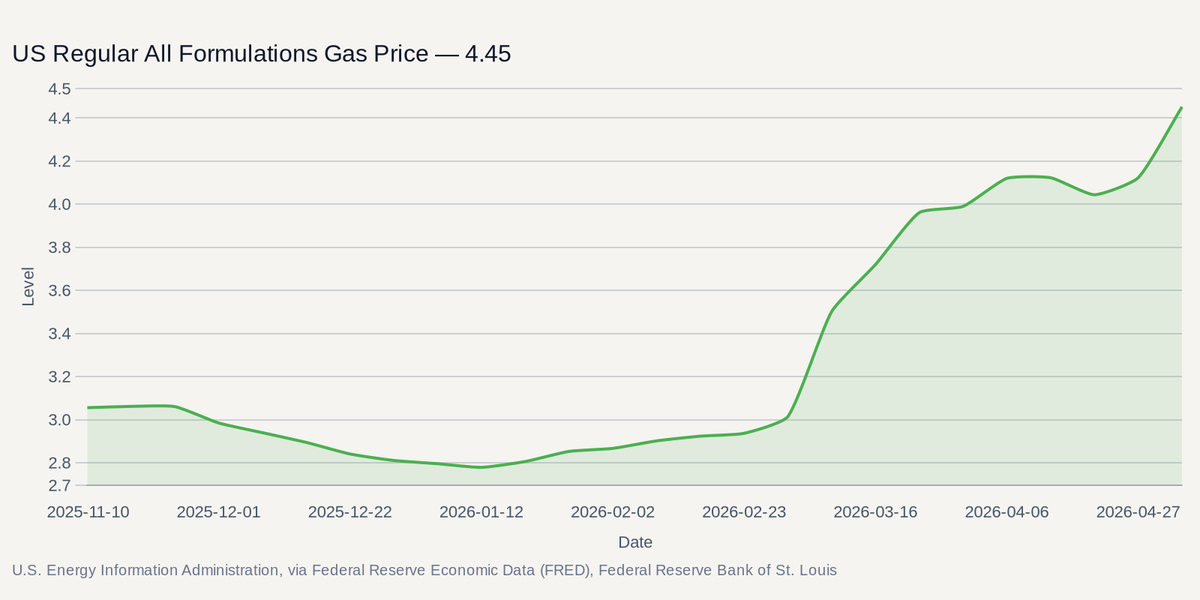
The transmission mechanism is straightforward: when the cost to fill a gas tank rises, discretionary fast-food visits and impulse purchases are often among the first items cut from household budgets. Inspire’s chief rivals, including McDonald’s and Domino’s, have pointed to pressure on consumer spending, though those trends are not always tied solely to energy costs. If inflation continues to weigh on everyday essentials, mass-market restaurants may face softer traffic and a more promotional competitive environment as they compete for a shrinking pool of disposable income.
The Valuation Premium for Trade-Down Defense
Because media coverage of a potential "consumer cliff" has persisted for years, actual retail sales have often acted as a recurring positive surprise—most recently evidenced by the 1.7% jump in March 2026. Yet sentiment remains ruthlessly selective. Investors are fiercely rewarding retailers that either cater strictly to premium segments or offer undeniable, margin-protected value to middle-income shoppers trading down.
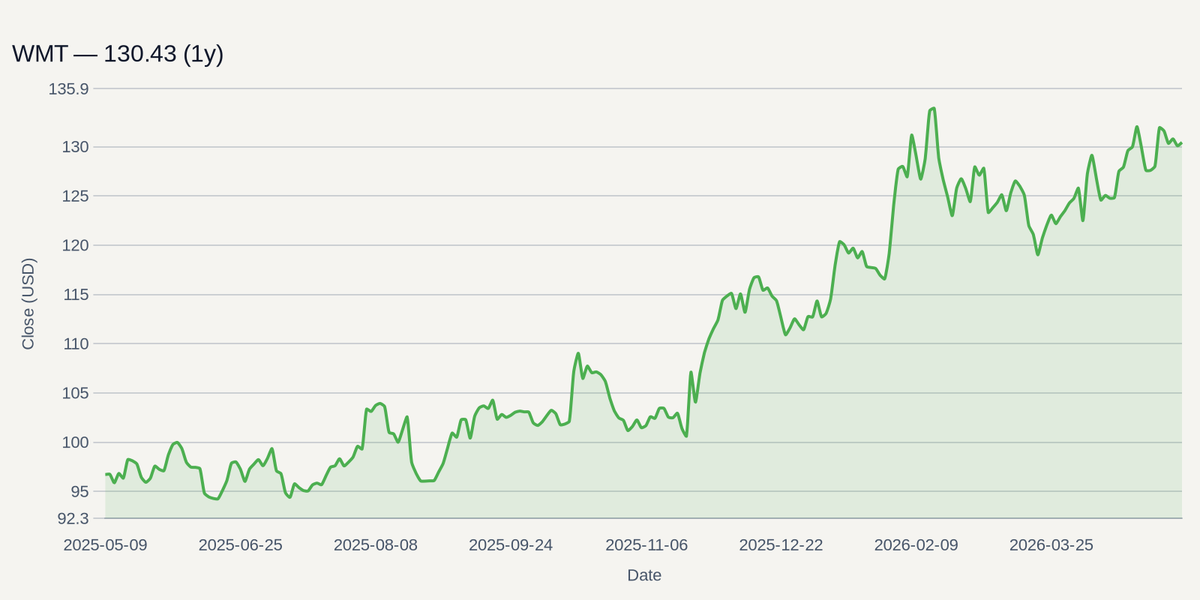
Walmart Inc has become the anchor for this safety trade, capturing trade-down momentum while simultaneously expanding higher-margin advertising—which reached $6.4 billion in global revenue for fiscal 2026—and e-commerce segments to protect its bottom line. Similarly, Costco Wholesale Corporation appeals to higher-income consumers seeking bulk value, effectively insulated by its recurring membership model; renewal rates held at 92.1% in early 2026 despite the 2024 fee increase. E-commerce giant Amazon.com Inc continues to consolidate retail market share, now controlling approximately 36% of U.S. online sales, by utilizing massive fulfillment scale to compress delivery costs, squeezing out smaller operators who cannot absorb rising logistics expenses.

For Inspire Brands, the pitch to institutional investors following its May 8, 2026, confidential IPO filing will rely heavily on scale. Seeking a valuation in the $20 billion range, the multi-brand strategy—spanning coffee, sandwiches, and casual dining—theoretically offers a hedge against weakness in any single consumer demographic. However, the core risk is that persistent energy shocks, exacerbated by recent fuel price volatility linked to Middle East tensions, could eventually exhaust the middle-income "trade-down" consumer, pushing them out of the drive-thru line entirely.
Calibrating the Macro Reality
The appetite for a massive, targeted $20 billion valuation debut—following Inspire Brands’ confidential IPO filing on May 8—will largely be dictated by macro data rolling in over the next few weeks. The market will get a critical pulse check on aggregate demand with the U.S. April Retail Sales release on May 14 .
Immediately following that macro print, first-quarter earnings from retail bellwethers like Walmart, Target, and Home Depot in mid-to-late May will strip away the headline noise, detailing exactly how much pricing power remains at the register. If those reports confirm that Consumer Spending Resilience and Emerging Cracks are manageable, Roark Capital's timing for Inspire's public debut may prove perfectly synchronized with a broader market willingness to look past temporary geopolitical headwinds.