
It is March 17, 2026, and the global economy is staring down one of the most significant supply chain disruptions in modern history. With the Strait of Hormuz closed amid a rapidly escalating U.S.-Iran conflict, global energy infrastructure is under siege. Yet, U.S. equities are displaying an eerie resilience—the S&P 500 actually climbed 1.02% today.
Beneath this index-level calm, however, capital is aggressively rotating. Wall Street is looking past the immediate inflation risks of $100-plus crude oil and pouring into the Defense & Security Tech Escalation trend. Investors are treating the Aerospace & Defense sector not just as a geopolitical hedge, but as the market's new premier growth engine.
The Geopolitical Catalyst
The macroeconomic environment is flashing complex signals. Surging oil prices have sent bond yields higher and strengthened the U.S. dollar, which is up more than 2% since the conflict began. According to recent commentary highlighted by Investopedia, billionaire investor Ray Dalio warned that the battle for control of Hormuz will likely be the "worst phase" of the conflict, potentially reshaping global power dynamics.
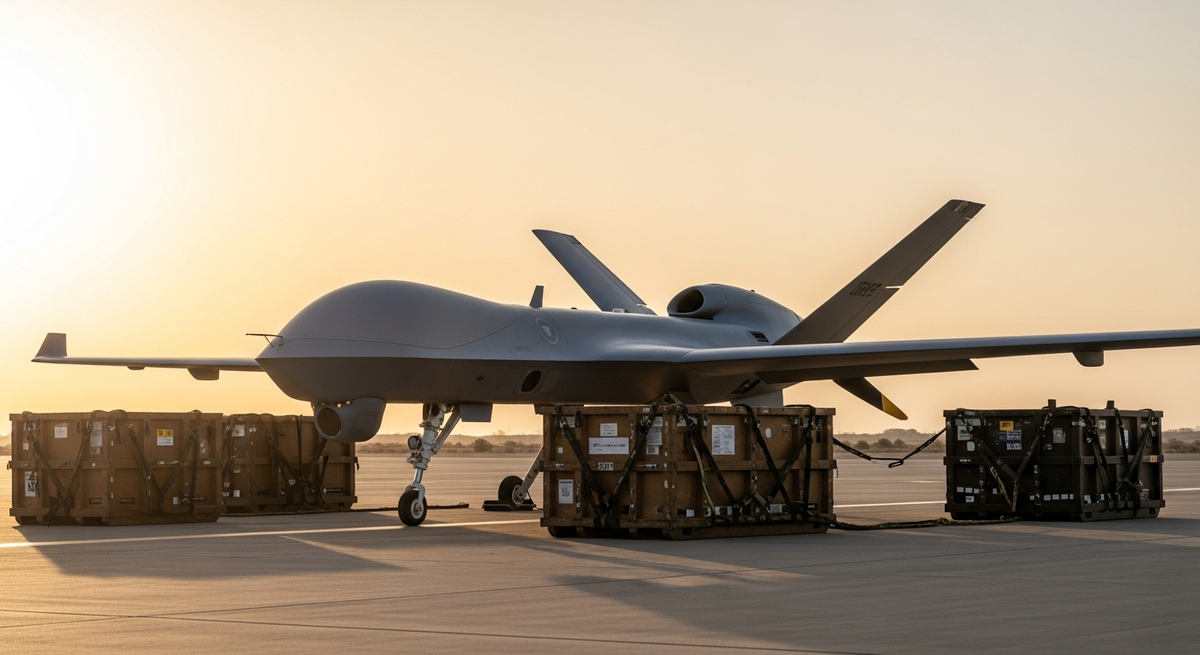
With political pressure mounting and President Trump expressing frustration over hesitant European allies, the U.S. is increasingly preparing to shoulder the naval escort and deterrence burden alone. Scouter AI data currently tracks this Industrials sub-sector with a massive Catalyst score of 9 out of 10. Active deployments of U.S. Marine expeditionary units to the Middle East are ongoing this month, and Congress is actively debating supplemental defense funding.
AI Logistics and Tactical Drones Take the Lead
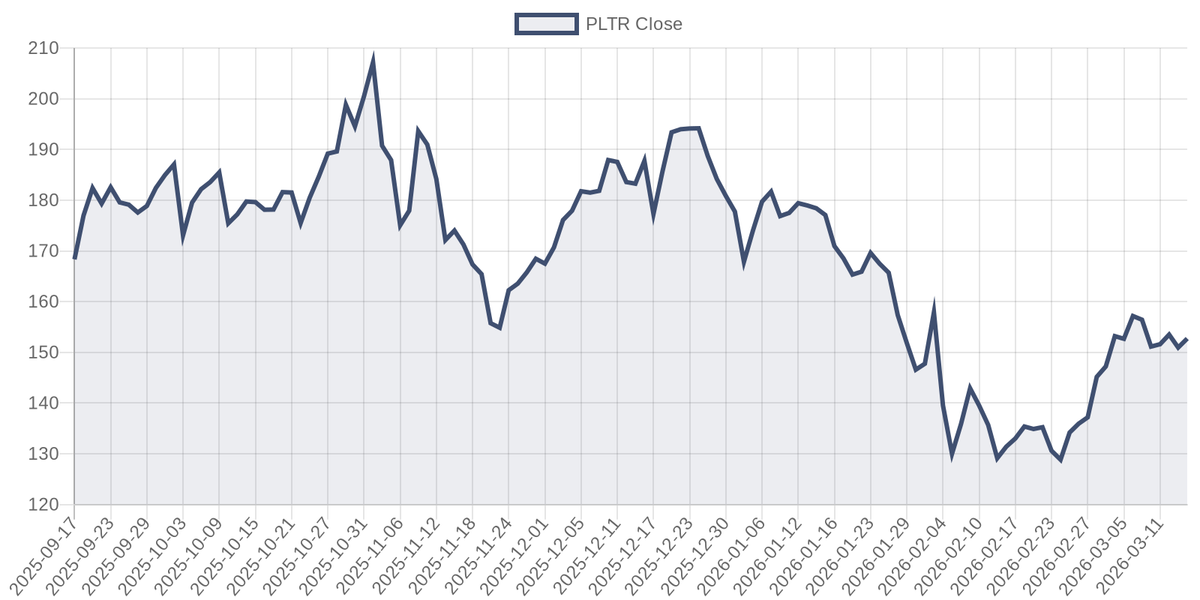
Unlike previous defense cycles that heavily favored traditional hardware, the 2026 rotation is heavily weighted toward asymmetric warfare and data analytics. PLTR has become a primary beneficiary, surging as military command centers rush to deploy its AI-driven battlefield software to untangle complex Middle Eastern logistics.
As the chart below shows, PLTR has experienced explosive momentum over the last six months, clearly illustrating how institutional capital is repricing the company's government revenue pipeline in real-time.
Beyond software, tactical hardware is capturing significant premium. Small-cap drone manufacturer RCAT is positioned perfectly for the exact type of drone warfare dominating the Persian Gulf. Meanwhile, legacy heavyweights like GD and LMT are catching bids as allied forces rapidly deplete and replenish standard munitions.
The Hidden Risks: Semiconductors and Diplomatic Unwinds
While the bull case for defense is clear, the broader market's resilience relies on a fragile tech sector that is uniquely vulnerable to this specific conflict. The Strait of Hormuz is a critical artery not just for crude oil, but for global helium supplies—a crucial input for semiconductor manufacturing. While foundries like TSM currently hold stockpiles, a prolonged closure could trigger a sudden multiple compression in chip stocks before physical shortages even hit the assembly lines.

Furthermore, the primary risk to the defense sector's current momentum (a Headwind score of 6/10) is a sudden diplomatic resolution. If a coalition successfully forces the Strait open or a ceasefire is reached, the geopolitical risk premium currently propping up defense multiples will evaporate overnight. Additionally, the very oil shock driving this narrative threatens to inflate raw material and logistics costs for these hardware contractors, potentially squeezing margins.
Looking Ahead to April
As we approach Q1 defense earnings in April, forward guidance will be the ultimate arbiter of this rally. Investors will be listening closely to LMT and GD to see if these macro geopolitical tensions have translated into inked government contracts. For now, the smartest capital is barbell-ing the stability of traditional aerospace primes with the high-beta upside of next-generation defense tech.