South Korea’s most valuable listed company is heading to the Nasdaq, and the scale of the offering exposes the staggering cost of leading the artificial intelligence hardware supply chain. SK Hynix is preparing to raise roughly $29 billion through American depositary receipts in a listing tentatively set for July 10. With shares up nearly 300% this year, the world's second-largest memory chipmaker is tapping U.S. equity markets for a singular purpose: financing the physical infrastructure required to maintain its grip on the high-bandwidth memory (HBM) market.
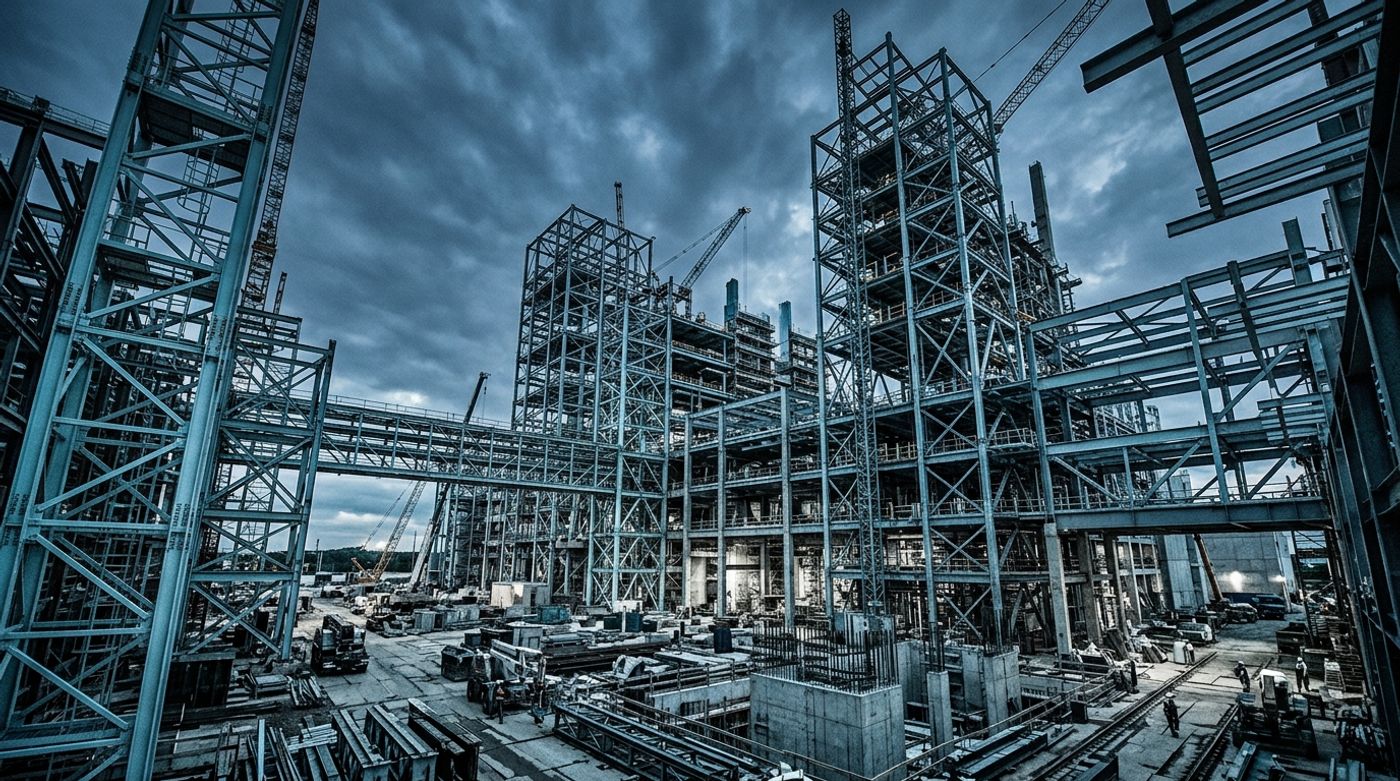
This is no longer just about designing faster chips. The Semiconductors race has evolved into an extreme capital-intensity contest. Hyperscalers are directing hundreds of billions of dollars toward data center buildouts, cementing advanced memory and logic components as the foundation of modern technology infrastructure . To meet that demand, companies like SK Hynix are forced to construct massive physical footprints—including a multi-fab "Yongin Cluster" in South Korea slated for 2027 and a new $4 billion packaging facility in Indiana.
Equipment Providers as the Ultimate Toll Booths
The real story behind a $29 billion capital raise is where those funds ultimately flow. Foundries and memory leaders are locked in a capacity arms race, and the primary beneficiaries are the ecosystem orchestrators supplying the equipment and advanced nodes.
Global semiconductor manufacturing equipment sales hit a record $135 billion in 2025 and are projected to reach $156 billion by 2027 . SK Hynix currently controls roughly 60% of the HBM market, a dominant position built on advanced packaging technology and superior operating margins. Defending that moat requires constant investment in extreme ultraviolet lithography and next-generation packaging tools.
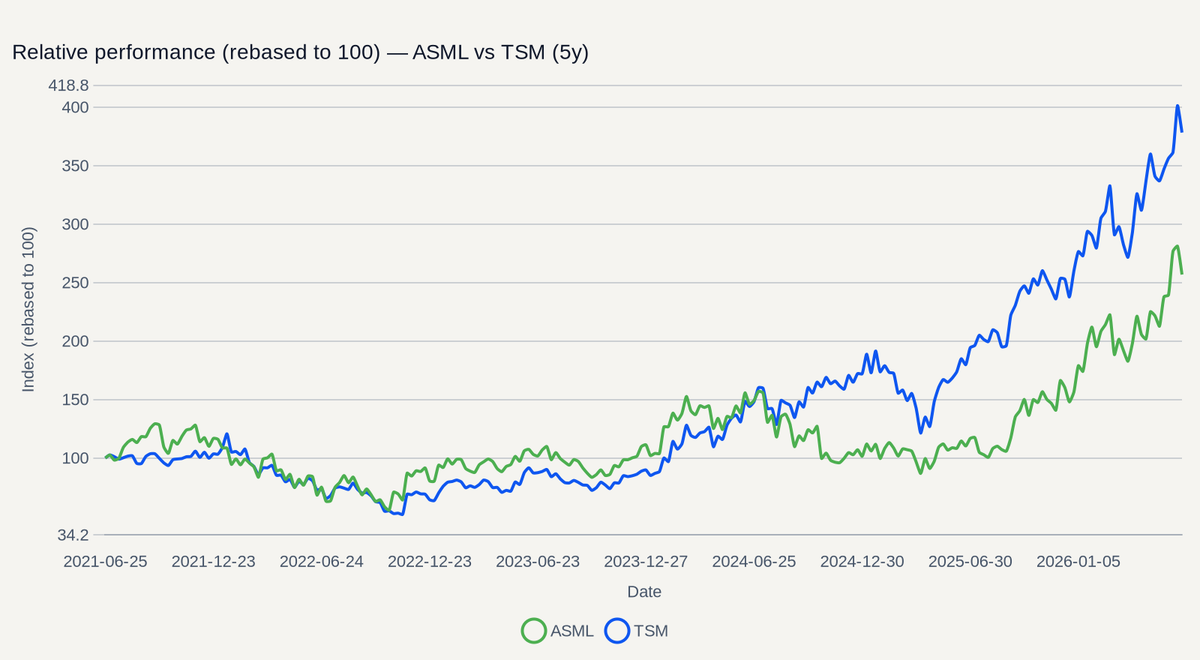
This dynamic heavily favors ASML Holding and Taiwan Semiconductor Manufacturing Company. ASML maintains an absolute monopoly on the lithography equipment essential for advanced nodes, while TSM remains the premier global foundry for fabless technology giants. When a company like SK Hynix secures fresh capital on this scale, a significant portion of that liquidity routes directly into the order books of these structural gatekeepers.
The Danger of Digestion and High Expectations
Despite structural tailwinds, this hyper-expansion carries execution risks. The AI Supercycle & Fab Buildout trend is vulnerable to pre-catalyst run-ups that exhaust buying power. Market history shows that when capital expenditures scale aggressively, expectations reset to extreme heights, triggering sharp corrections even when companies print positive results.
Diligence requires weighing the timeline of these capacity expansions against monetization metrics. If foundry expansion stalls, or if hyperscalers slow purchasing before new plants come online, high-beta hardware equities face downside risk. The global nature of this supply chain also leaves it exposed to geopolitical tariff risks—an overhang that can neutralize current-quarter earnings momentum.
The Summer Catalyst Gauntlet
We are entering a critical window for hardware validation. The sector faces a dense catalyst calendar over the next several weeks that will test whether the multi-year order book visibility justifies current valuations.
ASML reports second-quarter earnings on July 15, immediately followed by TSM on July 16. The focus will then shift to Advanced Micro Devices, which hosts its Advancing AI event in late July before reporting earnings on August 4. Finally, Nvidia anchors the cycle on August 26, delivering the ultimate read on data center GPU revenue and downstream HBM demand.
For now, SK Hynix's planned Nasdaq listing signals that the cost of entry in the memory oligopoly has permanently shifted. Competing requires unprecedented physical scale, and funding that scale increasingly demands the deep pockets of the American equity market.