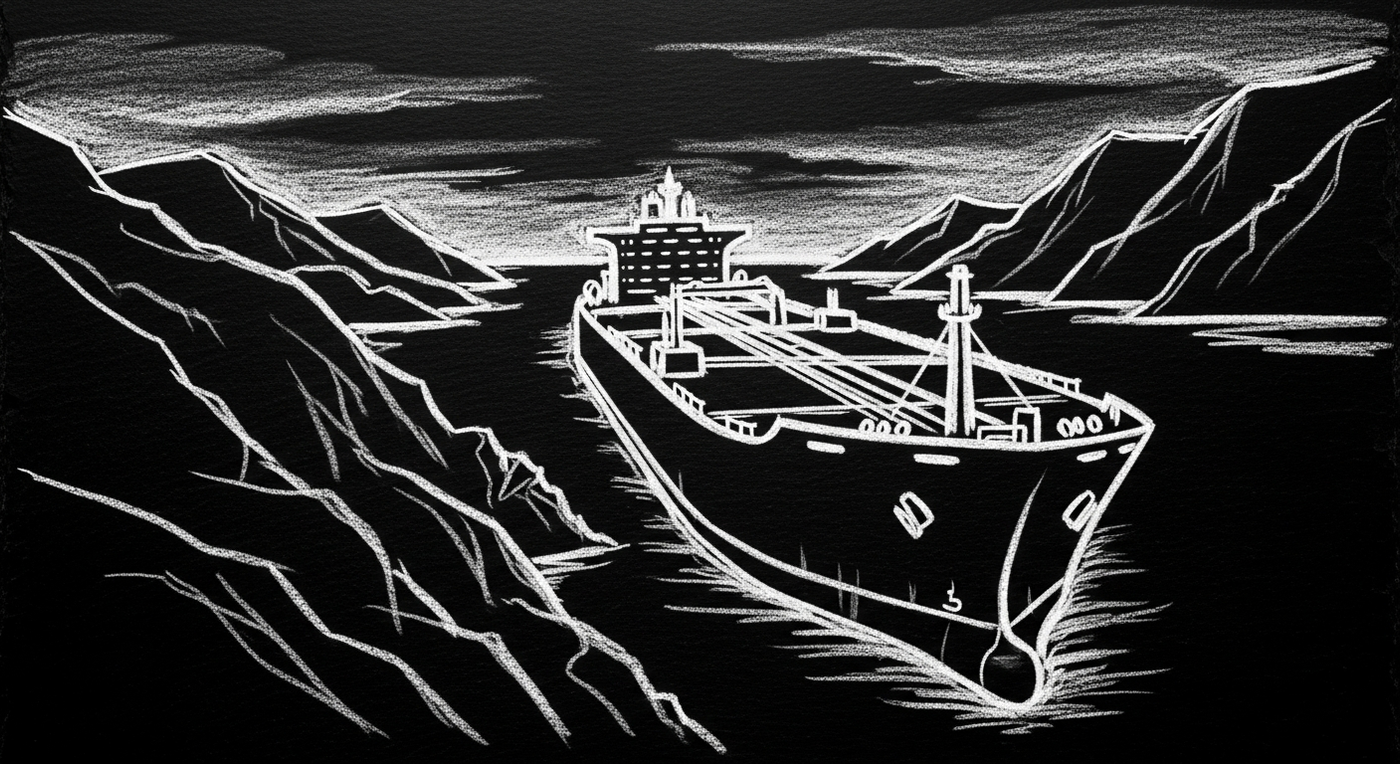
The massive supply shock emanating from the March 2026 US-Iran conflict has fundamentally rewired market leadership. With the Strait of Hormuz effectively closed—trapping roughly 20% of global oil transit—Brent crude has breached $114 a barrel. The fallout is twofold: a broader market slump led by the Nasdaq as stagflation fears mount, and an unprecedented margin bonanza for the Upstream E&P Geopolitical Supercycle.
The macroeconomic friction is palpable. Surging energy costs have injected an acute inflationary shock precisely as recession odds climb, cornering the Federal Reserve. The Bureau of Labor Statistics recently reported a 1.3% jump in February import prices, while the OECD sharply revised its U.S. inflation forecast upward to 4.2% for the year. This data briefly sent the odds of a December rate hike soaring past 50% last Friday, severely rattling tech and small-cap allocations.
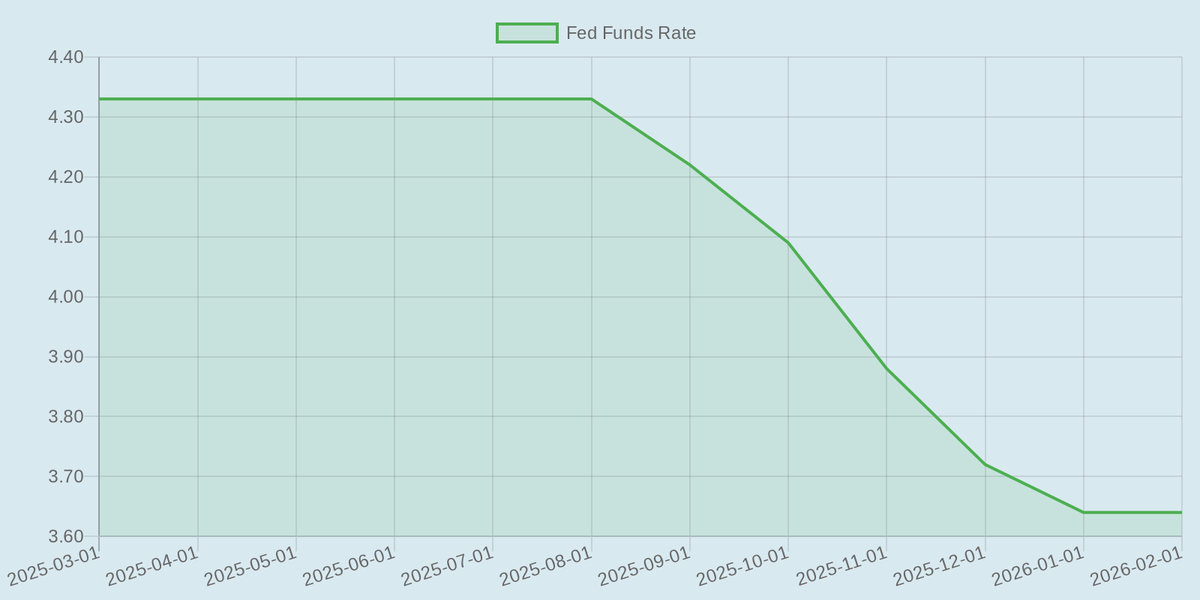
However, Fed Chair Jerome Powell attempted to soothe markets on Monday, signaling that policymakers will "look past" the energy shock, assuming it is short-lived. Following his remarks, traders rapidly priced out further hikes, returning the December rate hike probability to just 2.2%, according to the CME FedWatch Tool. As the chart below shows, the central bank aims to keep its benchmark target anchored in the 3.5% to 3.75% range, attempting to wait out the geopolitical storm without suffocating the fragile economy.

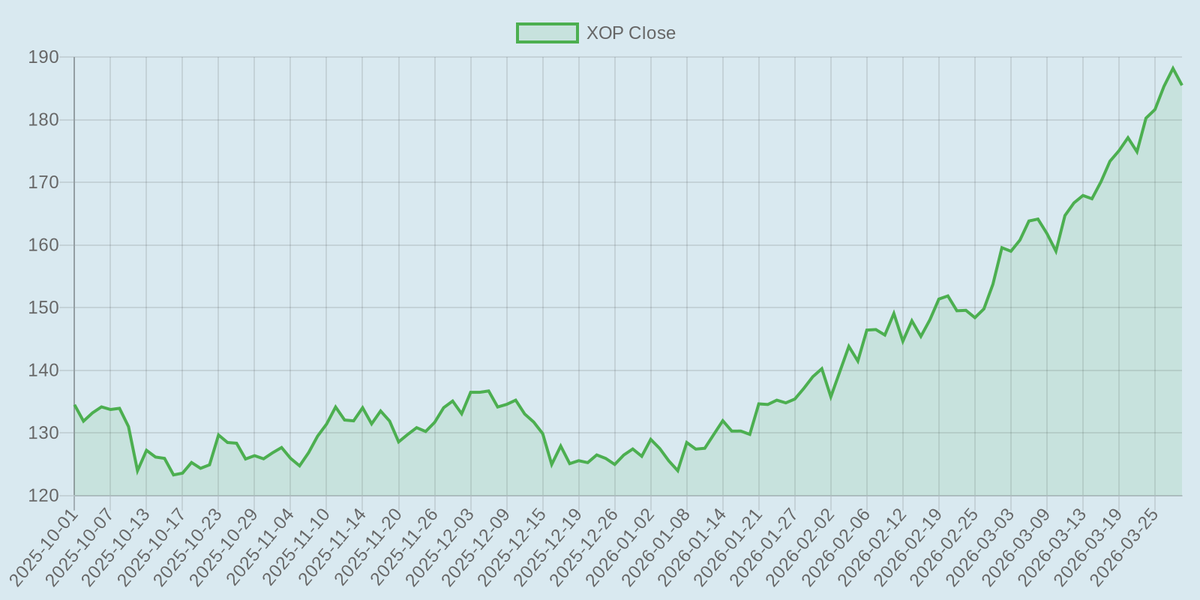
While the broader indices stumble under this uncertainty, the macro backdrop acts as pure jet fuel for the Energy sector. The SPDR S&P Oil & Gas Exploration & Production ETF has skyrocketed more than 43% year-to-date, riding an unprecedented 11-week winning streak through late March.
This is no longer a simple momentum play; it is a crowded "conviction trade." Large independent producers like APA and mid-cap standouts like SM are demonstrating immense operating leverage. At $110+ crude, these upstream operators are generating unparalleled free cash flow expansion. As the chart above illustrates, the relentless six-month ascent of XOP perfectly tracks the escalating Middle East tensions.
Yet, prudent investors must steel-man the opposing scenario. The core vulnerability of this Upstream E&P Geopolitical Supercycle is its heavy reliance on sustained conflict. A sudden diplomatic breakthrough in the ongoing April US-Iran 15-point peace proposal negotiations would immediately wipe out the estimated $18 to $20 per barrel geopolitical risk premium. If global flows normalize, oil prices would drop violently to meet the International Energy Agency's projected baseline 2026 supply surplus of 3.8 million barrels per day. Furthermore, OPEC+ holds substantial spare capacity and may resume unwinding its voluntary production cuts if artificially inflated prices trigger widespread demand destruction.
Looking ahead, markets face a gauntlet of critical tests. April 30 serves as a crucial timeline threshold for prediction markets pricing the return of normal Hormuz traffic, followed closely by the 41st OPEC+ Full Ministerial Meeting on June 7.
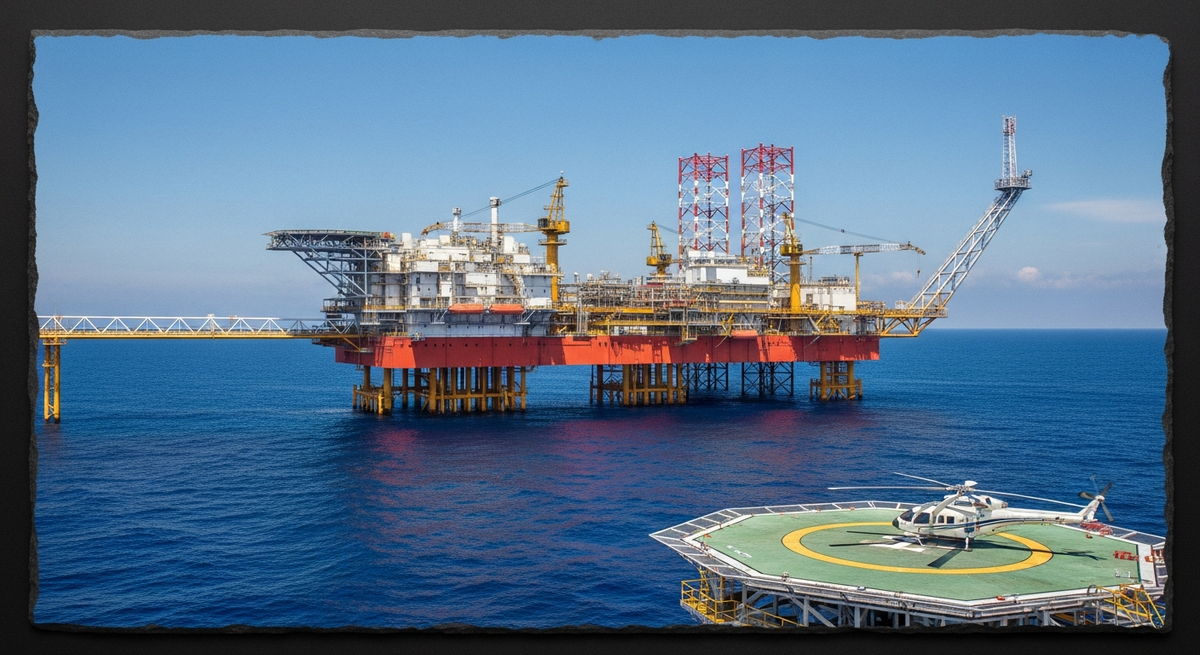
For investors seeking to navigate this knife-edge tape, pure-play domestic or offshore operators offer a distinct structural advantage. Companies heavily leveraged to crude upside but geographically insulated from Middle East transit risks—such as Gulf of Mexico operator TALO—provide a strategic avenue to capture the current supercycle's massive cash flows while mitigating the catastrophic downside of a sudden geopolitical unwind.