
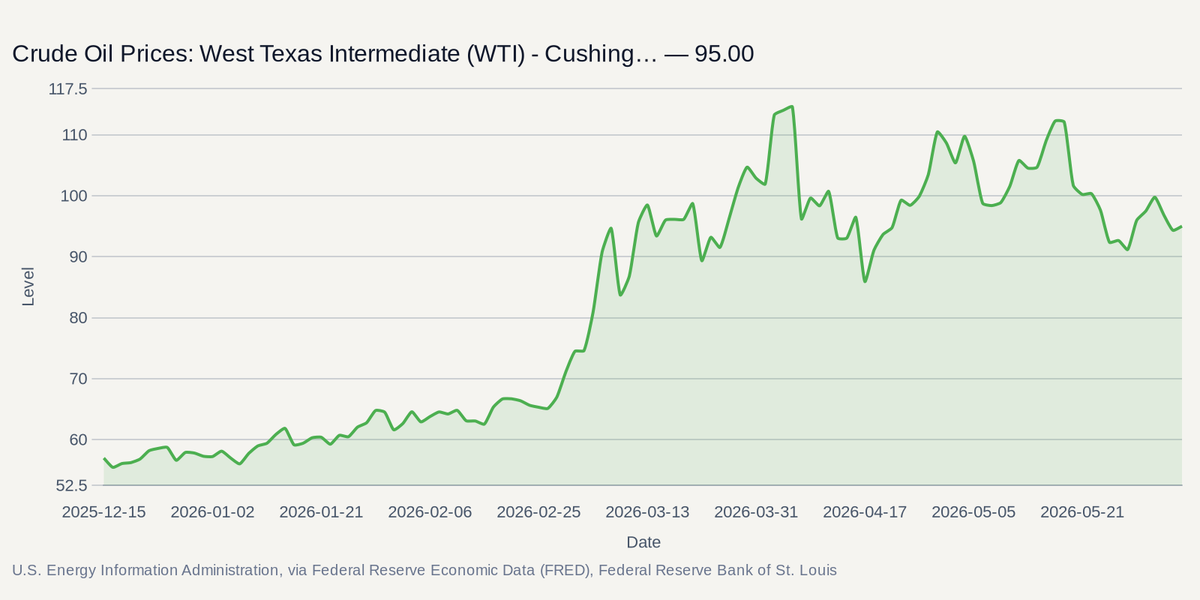
Crude oil is in freefall this week as the U.S. and Iran inch toward a ceasefire deal. Brent and WTI benchmarks plunged after President Trump abruptly canceled planned airstrikes, telegraphing a potential diplomatic breakthrough that could finally reopen the Strait of Hormuz. That geopolitical thaw is pulling the floor out from under energy markets, handing newly installed Federal Reserve Chairman Kevin Warsh an unexpected gift just days before his first policy meeting.
The sudden drop in energy prices completely scrambles the immediate macro calculus. A softer-than-expected core PPI print and a cooling dollar suggest the immediate inflation threat is retreating . If flows normalize through the Middle East chokepoint, core inflation has a clear downward runway by late summer, opening modest room for the central bank to ease financial conditions .
Deflating the Geopolitical Risk Premium
Exxon Mobil stands as the canary in the coal mine for the immediate Post-Ceasefire Macro Pivot. If negotiators finalize an interim deal alongside the G7 summit in Evian, extending the ceasefire for two months, the geopolitical risk premium effectively vanishes. WTI crude dropping below the $85 support level leaves energy margins exposed to raw fundamental demand.
Institutional positioning already reflects this pivot from cyclical reacceleration to a highly fragile, geopolitically sensitive regime . Capital fleeing the commodity complex needs a home, and historical data shows quantitative models struggle to navigate these distinct prediction blindspots when supply chains rapidly normalize.
A Dovish Window for a Silent Fed

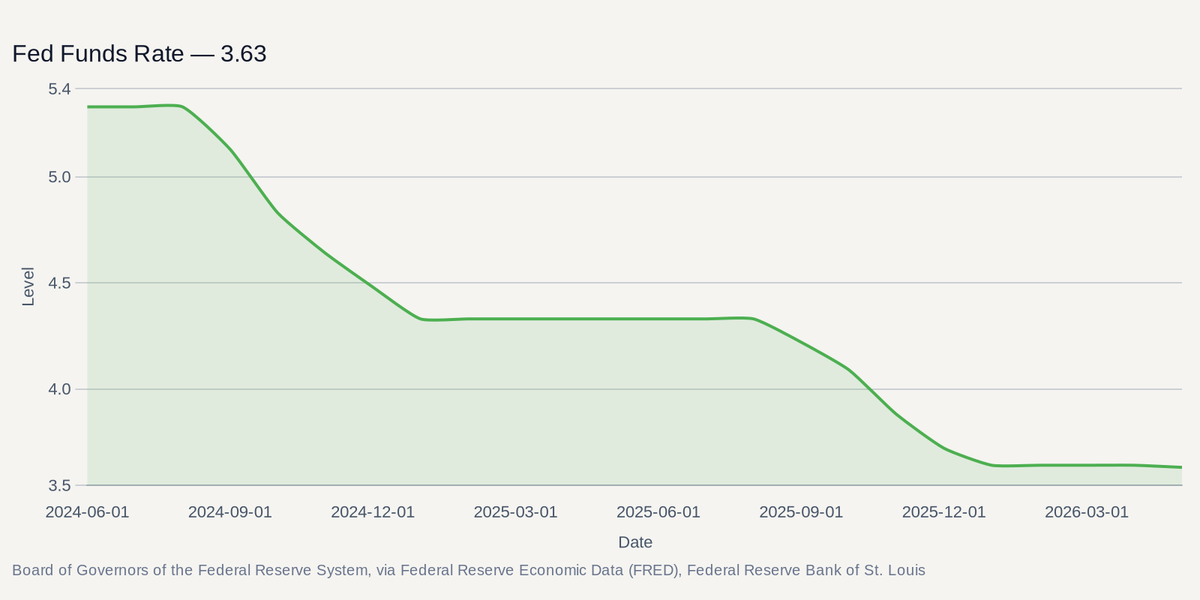
Warsh intends to dismantle the Jerome Powell era of hyper-communication. The new Chairman favors fewer press conferences and a rollback of forward guidance, while the broader FOMC is widely expected to eliminate the "easing bias" from its formal statement. He prefers markets to stop hanging on every central bank syllable.
But silence introduces distinct volatility. Without a telegraphed path, investors must price rate decisions on raw data alone. Fortunately for Warsh, plunging oil provides the perfect cover to navigate political pressure for rate cuts without immediately re-igniting structural inflation panics. He can let falling energy prices do the heavy lifting for the consumer while maintaining central bank distance from daily market expectations.
Yield Curve Blindness Across the Financial Stack
Without explicit forward guidance, the bond market is flying without instruments. That injects heavy duration risk into financials. Mega-banks like JPMorgan Chase, Bank of America, and Citigroup face shifting net interest margins as the yield curve attempts to find an unguided equilibrium in Warsh's new silent regime.
While traditional macroeconomic anchors dissolve, capital allocators are parking liquidity in structural mega-forces. Despite broader instability—including soaring U.S. government debt and global fragmentation—companies like Microsoft continue to absorb massive capital expenditure for artificial intelligence build-outs. These structural tech assets are serving as reliable anchors while the broader market attempts to price the fallout of a sudden, unpredictable ceasefire.