The narrative of a seamless "soft landing" faced a stress test yesterday after minutes from the Federal Reserve's January meeting revealed a central bank far more divided than markets anticipated. While the Federal Open Market Committee (FOMC) voted 10-2 to hold the benchmark rate steady at 3.5%–3.75%, the details released Wednesday show that the consensus is fracturing. For the first time in months, the conversation has shifted from "when to cut" to a starker reality: some officials believe a return to rate hikes may be necessary.
The "Hike" Risk Re-Emerged
According to the minutes released by the Federal Reserve, "several" participants argued that if inflation remains stuck above the 2% target, upward adjustments to the federal funds rate could be appropriate. This language introduces a two-sided risk to monetary policy that had largely been priced out by equity markets entering 2026.
This hawkish tone clashes directly with the dissent from Governors Christopher Waller and Stephen Miran, who voted in favor of immediate cuts citing labor market concerns. This split—hawks warning of stubborn prices and doves eyeing employment cracks—creates a volatile backdrop for investors who had been positioning for a unified easing cycle.
Inflation is Stickier Than Expected
The core driver of this newfound caution is the data. While inflation cooled significantly in early 2025, progress has stalled. The Fed's preferred gauge, the Personal Consumption Expenditures (PCE) price index, ticked up to 2.8% year-over-year in November, erasing some of the improvements seen earlier in the year.
As the chart below illustrates, while the trend line from 2024 showed disinflation, the recent plateau—hovering near 3%—is keeping the Fed from declaring victory.
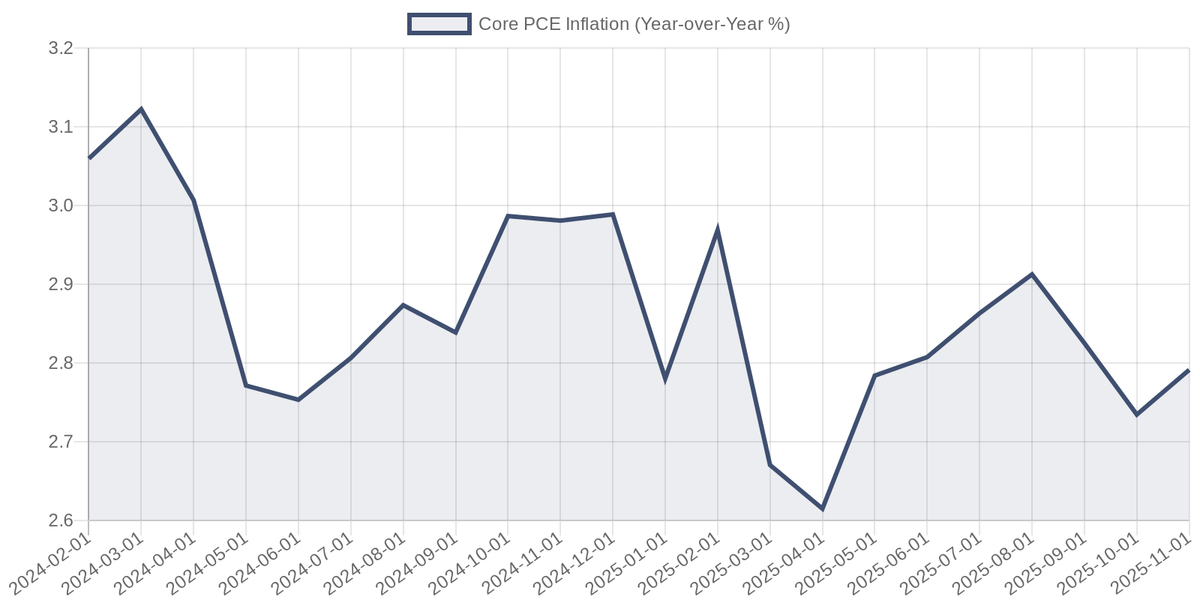
*Figure 1: Core PCE Inflation (Year-over-Year Percent Change) over the last two years. Note the flattening of the curve in late 2025, which has prompted renewed caution among FOMC members.*
Market Disconnect: Tech Ignores the Fed?
Despite the hawkish signal, equity markets showed remarkable resilience during yesterday's session, with the Nasdaq Composite gaining nearly 0.8%. This divergence suggests that investors are either betting the Fed is bluffing or that strong growth signals—particularly from the AI sector—are enough to offset the headwinds of "higher for longer" rates.
However, currency markets are paying closer attention. Asian currencies consolidated against the dollar this morning, reflecting fading risk appetite as traders price in the possibility that U.S. rates may not fall as quickly as their global counterparts.
The Institutional Context
The Fed's hesitation comes amid a complex political backdrop. With inflation acting as a persistent squeeze on household budgets, the central bank is under pressure to stabilize prices without triggering a recession—a task complicated by recent tariff implementations that Powell noted have kept inflation "closer to 2% but for the effects of tariffs."
What This Means for Investors
This regime of "Fed confusion"—where dissent is high and forward guidance is murky—typically breeds volatility.
- For Fixed Income: The reintroduction of hike risk suggests the short end of the curve may remain elevated. The "easy money" trade in bonds is paused until data confirms disinflation is back on track.
- For Equities: While tech has led the charge, sectors sensitive to borrowing costs, such as Real Estate and Utilities, may face renewed pressure if the "hike" narrative gains traction.
Investors should closely watch the next PCE release. If the data confirms the 2.8% plateau, the "several" officials calling for hikes could become a loud majority, forcing a rapid repricing of risk assets.